Tuesday, November 27, 2018

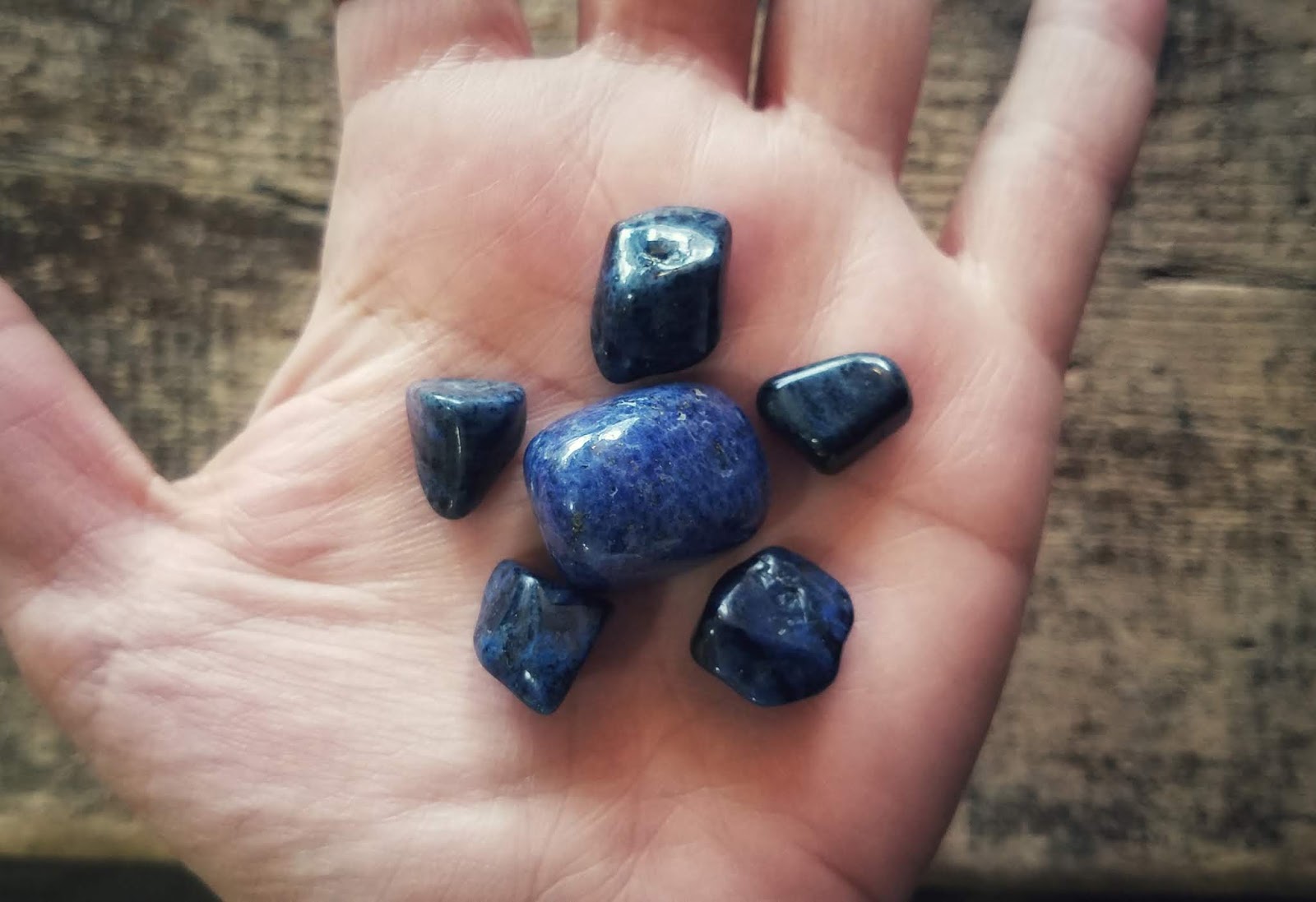
DUMORTIERITE: Gemstone of the Month

"Dumortierite opens the doors of insight, activating the third eye chakra and assisting one in making the mental leaps necessary for transcending intractable difficulties or seemingly hopeless situations. It enhances all mental abilities- linguistic, mathematical, abstract, etc.- as well as what is termed 'emotional intelligence.' It activates the latent psychic abilities and stimulates clairvoyance, clairaudience and clairsentience. In gifted individuals, it can instill the gift of prophetic vision. It can even facilitate the building of skills in psychometry and psychokinesis. The simplest way to work with Dumortierite for these purposes is to meditate or sleep with one of the stones. In addition, wearing a piece of Dumortierite in jewelry allows one to be immersed in its energetic pattern all day long, speeding the process of vibrational assimilation.
Dumortierite is a strong stone of mental discipline and is capable of enhancing one's 'will power' in regards to learning. It is excellent for students, especially those required to take in large amounts of information in short periods of time. It aids in memory retention, as well as in the mental manipulation of concepts necessary to bring forward a new synthesis of ideas.
Because of its stimulation of mental and psychic powers, Dumortierite is ideal for those who work in areas such as astrology and tarot. In both cases, one must master a complex symbolic system and then use one's intuitive abilities to derive the most accurate interpretation from the data at hand. This type of task is tailor-made for the properties of Dumortierite." -The Book of Stones

WHITE SPRUCE: Essential Oil of the Month

White Spruce is an evergreen tree that is native to North America. The essential oil is uplifting and calming at the same time. It relaxes and restores energy and emotions. The scent is very fresh and piney. Because it is antimicrobial, using it in a diffuser to help clear the air is a wonderful use of this oil around the holidays. White Spruce oil supports general wellness and promotes healthy respiratory systems. Many use it for pain and inflammation, as well as to ease joint and muscle tension. Try blending it with peppermint oil and diluting in a carrier oil for a sore muscle rub!


by Kristy Baird

Saturday, November 17, 2018

Chill Out This Holiday Season: Stress-Less Remedies

The holidays can be a wonderful time with friends and family. It's a time to remember the past or make memories for the future. I love the traditions our family has developed over the years, but it can also be a time of great stress. You get caught in traffic jams. When shopping for a special gift, you find every store is currently out of the one thing you wanted. You need time for baking and decorating. It's during these times your adrenal alarm goes off in response to stress, excitement or anxiety. Your adrenal glands are controlled by your nervous system and respond quickly to your emotions. Extra stress overworks these glands and they become exhausted. You get sluggish and seem tired all the time (not exactly what you need at this time of year).
Make sure you are getting a sufficient supply of the "anti-stress" B vitamins. Also consider nervous system sedatives such as Valerian, Scullcap, Chamomile and California Poppy to help keep you calm and to repair damage that may already have been done (heart disease, ulcers, allergies, high blood pressure, headaches, need I go on?).
The versatile herb Valerian calms people who are agitated, but stimulates those who feel fatigued. (To get the full picture of just what Valerian can do, read Valerian: The Relaxing and Sleep Herb, by Christopher Hobbs).
American Ginseng and Siberian Ginseng can help you handle stress by sedating or stimulating your central nervous system, according to your body's needs. Ginseng also increases your brain's utilization of amino acids, which is important because when you are under stress, your body uses more protein than usual. (Proteins are composed of amino acids).
Schizandra also has a regulating effect on the central nervous system. This herb quickens responses and makes you more alert. It relieves headaches, insomnia, dizziness and calms a racing heart. It also has been reported to control anger and aggression.
Kava tea is used to induce relaxation, restful sleep and a sense of mild euphoria. Kava is not a true sedative, however. Instead, it is a muscle relaxant. It is used to treat nervous tension, muscle spasms, tension headaches, insomnia from stress or tight muscles. I have found that Kava lives up to its reputation of promoting peace and harmony among people. This is a pretty amazing feat for an herb, but I am convinced that all the world's leaders should sit down to cups of Kava before their meetings.
You can make a tincture to use in emergencies.

"Chill Out Tincture"
Combine 1 tsp. each tinctures of Valerian, Licorice Root, Siberian Ginseng Root, Kava Root and California Poppy.
 Take as needed up to 1 tsp. per hour (in emergencies). Otherwise, take 1/2-1 dropperful per day, as a general aid.

If the tincture isn't your style, and if you're a person who enjoys hot baths, combining herbs with heat is one way to combine stress-relieving methods. Add herbs or essential oils to warm compresses or baths. There is evidence that at least 20 minutes of heat in a sauna or hot tub or half an hour of deep massage changes brain chemistry for the better. Some of the most relaxing essential oils to try include lavender, chamomile, sandalwood, orange, petitgrain and ylang ylang.


by Judy Burger

ELECAMPANE: Herb of the Month

Elecampane is named after Helen of Troy, who was said to carry the flowers with her as she was abducted from Sparta. It is also called Elfwort. This lovely plant ally has vibrant yellow flowers and downy leaves and is in the same family as sunflowers and ragweed (if you're allergic to chamomile, feverfew or echinacea, she may not be for you).
Elecampane is a bitter, spicy, aromatic and warming antimicrobial herb. It is great for helping to dispel that cold, damp early winter malaise. Typically, it is taken in a tea, capsule or tincture.
Most commonly, Elecampane is associated with lung issues. This makes sense, as it is a great expectorant and can help with chronic bronchitis and pertussis, bronchial asthma, emphysema and tuberculosis. It helps to relax cold, wet lung issues by warming, loosening and drawing forth stuck phlegm.
Elecampane is also a great helper for digestive issues, such as bloating and gas. It helps to stimulate digestion and can be candied or given as a syrup. It is a wonderful herb to reach for when treating children and the elderly, as it is sweet and stimulating and helps to combat invading illness. Its high inulin content can help to stabilize blood sugar and it can be taken as a general tonic for the pancreas.
Elecampane is also said to enhance psychic abilities. It is one part of a medieval nine herb bath blend that is said to impart protection from witchcraft. The root can be burned as a protective incense or worn as an amulet.


by Kristy Baird

Book Spotlight: Sidewalk Oracles by Robert Moss


Synchronicity is when the universe gets personal. Through this book of games and enchanting stories, you’ll learn how to monitor the play of coincidence and the symbolic resonance of incidents in daily life in order to tap into the deeper logic of events, receive extraordinary counsel, and have wonderful fun.

You will be invited to become a kairomancer: someone who is poised to catch the messages in special moments when synchronicity is in play — and to take action to seize the opportunities those moments present. To be a kairomancer, you need to trust your feelings as you walk the roads of this world, to develop your personal science of shivers, and to recognize in your gut and your skin that you know far more than you hold on the surface of consciousness.

This is a way of real magic, which is the art of bringing gifts from a deeper world into this one. Follow it, and you will put a champagne fizz of enchantment into your everyday life.

Tuesday, October 30, 2018

Dylanna Jackon Grasinger of the International Institute of Erie: Interview

by Chelsea Morning


There is nothing sweeter in this difficult world than finding your place, coming home, and sharing your life with loving family and true friends.

Most of us have our humble homes, our little nests filled with our favorite things, a place to tuck our children safely in with love and lullabies , to dance, to sing, and to dream, a moveable feast of life, that infuses into the walls, the floorboards, the very foundation.
As the holiday season embraces us and we fill our warm dens with our tribe of family and dear friends, when the smell of spice steeps our kitchen like tea, and little trinkets are joyfully gifted and lovingly received. Let us also think of our neighbors and those in need.

For refugees and immigrant families, whose lives have been uprooted from their communities, finding no other choice but to flee from war, injustice, and violence, leaving behind their homes, their favorite things, their own spice-scented kitchens and memory-infused walls to seek refuge, shelter and new beginnings, starting over in a new place can be difficult and frightening.

We, as individuals and as a community can be the change we wish to see. We can help our new neighbors find their place and finally feel safe, welcome and at home. I asked Dylanna Jackson Grasinger, the earnest, compassionate, and amazing director of the International Institute of Erie, what we can do to help.
What is the mission of the International Institute of Erie? What services do you provide?
Our mission: We are part of a nationwide network that assists the world’s most vulnerable people overcome social, cultural and economic barriers so that they can flourish and help local communities grow.
We provide a variety of services to assist the newest members of the Erie community. Our Reception and Placement Program (R&P) is the welcoming committee. R&P workers meet new arrivals at the airport, get them into their homes, provide cultural orientation and show them how to navigate through the city and through all the various systems they will use towards establishing their own success. Our Matching Grant Program (MG) works with our arrivals who are able to work and provides classes and support towards finding sustainable employment. We have an interpretation program to help improve communication between our new arrivals and providers. We also have a diverse portfolio of ongoing classes that assist with learning English, family support, women’s groups as well as childcare and after school programming.

Each of the individuals and families you serve are all seeking safety, freedom, and the opportunity to rebuild their lives and their futures. Many have had to flee their homes, leaving much behind, and arriving here with very little. Donations, of course, is one way the Erie community can help our new neighbors feel welcome. What are some of the more helpful donations that are needed, and where can donations be brought to?
The Erie community has always been a very giving community. Donations help us to fulfill our mission. Our families arrive with little more than their clothing, and the weather they are coming from is not the same as the weather we enjoy here in Erie. Donations of winter coats, boots, gloves and hats are always welcomed. Backpacks, school uniforms and other school supplies are extremely
useful in preparing our students for school. Household goods ranging from silverware through pots and pans in good condition are helpful in getting our households set up. Gift cards to Walmart or cash donations always seem to help us get needed supplies and household goods. Furniture donations are on an as-needed basis. All of these donations can be brought to the International Institute at 517 E. 26th Street, Erie, Pa from 8am until 4pm, Monday through Friday. If you have any questions call (814) 452-3935 ext 2021 or email jbrooks@uscri-erie.org.

Other than donations, are there other ways the Erie community can be supportive? Are there opportunities for local employers or landlords to become involved? Are there occasions where people can volunteer?
Erie has long been a very welcoming community for people wanting to build a better life and continues that tradition and support. We work with a variety of landlords and employers who see the benefits of having refugees as tenants and employees. We have amazing volunteer opportunities ranging from assisting in-home set up, organization of donations, assistance with office work, etc. If someone is interested in getting involved as an employer, landlord or volunteer call (814) 452-3935.

The families and individuals arriving here are coming from many different countries, with lifestyles and culture that may have few similarities to America. What have you noticed that they like most about living in Erie, and what do you feel our community can do to help them feel more at home?
The amazing thing about refugees that arrive here in Erie is not the differences, but the similarities. People come here looking for a safe place to live, the ability to earn a living, and the opportunity for their children to achieve their dreams. Our clients love that Erie provides them those opportunities. Community members should treat them like they would treat their other neighbors. Speak to them when they have the opportunity. Make sure they feel welcomed. Ask them questions and provide them with information and help if the opportunity arises.

After having worked with so many uprooted families, assisting them in reclaiming their lives, learning their culture, hearing their stories, witnessing their struggles, watching them achieve their dreams; what does the word ‘Home’ now mean to you?
I have been fortunate enough to meet and know people from around the world and be a part of their success. They are defined by their love of their family, desire to build the best life possible and acceptance of things that cannot be changed. I try to build my home around those same concepts.

http://refugees.org/field-office/erie/
Follow on Facebook at: International Institute of Erie/USCRI

Saturday, October 27, 2018

I Can't Believe I Ate The Whole Thing!: Digestive Upsets


This is the time of year most of us generally heap liberal amounts of abuse on our digestive systems on a day we call "Thanksgiving". Our bodies sure aren't thankful and, unfortunately, have ways of exacting revenge. Upset stomach, burping, gas, heartburn and indigestion can ruin the whole day. Herbs can help. Be aware, however, that if your digestive problems involve pain or bleeding, you may have a more serious disorder such as appendicitis or intestinal blockage. Seek appropriate help.

Heartburn is most often caused by too much acid in your stomach, or hiatel hernia. Herbs that decrease stomach acid include licorice root, meadowsweet, chamomile and lemon. Herbs that absorb excess acid are slippery elm, marshmallow, flax and fenugreek seeds. The acids in carrots and apples also neutralize stomach acid. Clinical studies have shown that chamomile, marshmallow, licorice, slippery elm, calendula, garlic, wild yam and St. John's wort protect the stomach from its own acid and also reduce inflammation and infection of the lining. If you suffer from gas, try using coriander, anise, caraway, fennel and basil in your cooking, or make yourself a tea of peppermint, thyme, lemon balm or chamomile. Most of these herbs are described as digestive stimulants, but research has found that they actually relax intestinal muscles and relieve cramping. Peppermint is the most popular of all of these herbs. Caution: people with gastric reflux should not drink peppermint tea because it relaxes the sphincter between the esophagus and the stomach.

Many people assume that their stomach problems are caused by too much acid, but poor digestion of proteins can result in too little stomach acid. Gas and indigestion following a high-protein meal are an indication of this. A treatment for low stomach acid is to take herbal bitters, which encourage your stomach to produce its own acid. True to their name, these herbs are bitter. One of the best-known bitters is gentian. Bitters are quite popular in Europe but have a rather limited popularity here in the USA. However, we drink our bitters without even knowing it. The primary ingredient in beer is the digestive bitter known as hops. Other bitters include goldenseal, Oregon grape root, blessed thistle, chicory and dandelion.

You can forget taking capsules to disguise the bitterness- you won't get the same results this way. You can mix bitters with tastier herbs such as orange peel and spices, or even sweeten them. Fortunately, you do not need much of a bitter to enjoy its effects. Just fifteen drops of a tincture or a quarter teaspoon of the powdered herb before each meal is enough. (Recommended amounts of all these herbs are considered safe for otherwise healthy, nonpregnant, nonnursing adults. Use all herbs cautiously and be aware of any contraindications.)

Heartburn Formula
1 tsp. each chamomile flowers, lemon balm leaves, licorice root
1/2 tsp. slippery elm
1/4 tsp. each fennel seeds, catnip leaves
1 1/2 cups boiling water
1 1/2 cups apple juice (optional)
Combine herbs and pour boiling water over them. Steep 15 minutes, strain out herbs and add juice. Drink 1 cup after each meal. Store in the refrigerator. This will keep for a few days.


by Judy Burger